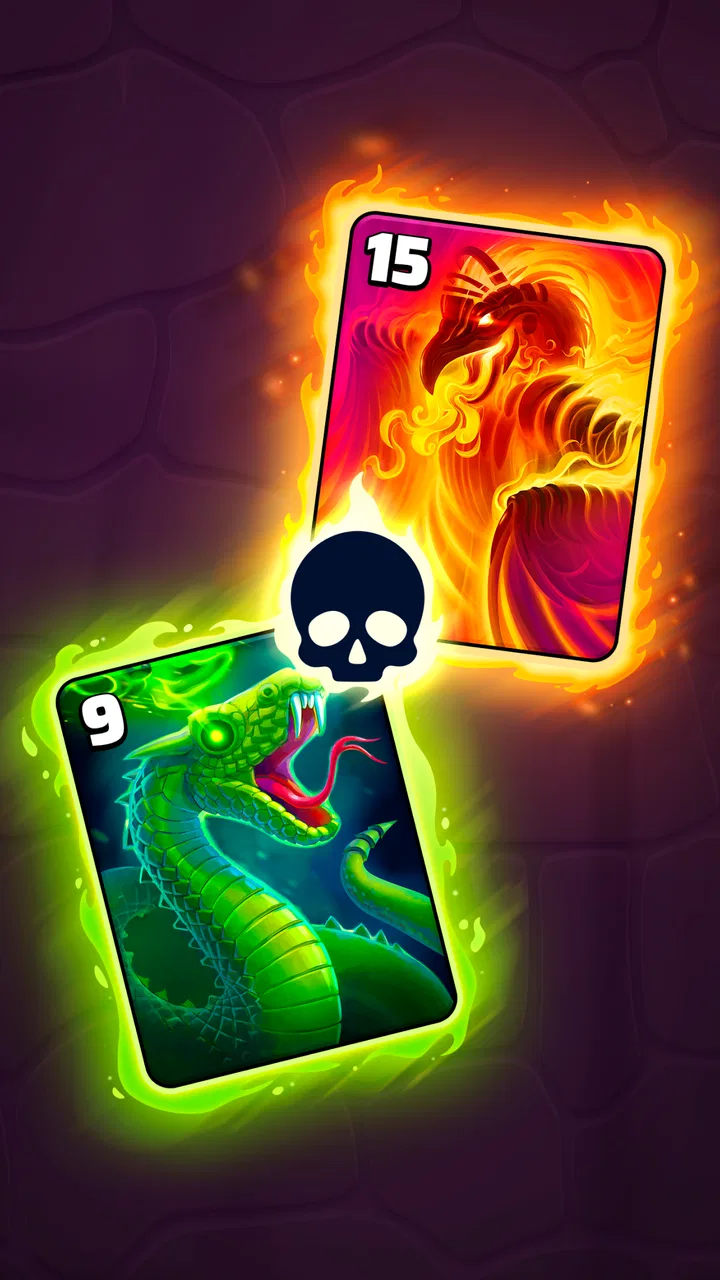
Black Deck - Card Battle CCG
- 4.3
- Rating
- 5.00M
- Installs
- Free
- Price

 Analysis by App-foxy
I spent time with Black Deck - Card Battle CCG expecting a quick card game and found something closer to a lightweight collectible-card role-playing game. Its basic appeal is easy to understand: build around hero cards, enter duels, and keep improving your collection as the challenges become less forgiving. That familiar loop makes it approachable, but the real question is whether the goals and unlocks give you enough reason to return after the first few matches.
My overall impression is positive, with an important qualification. This is a good fit if you enjoy short tactical battles, gradual collection building, and the feeling of turning a modest deck into something more capable. It is less suitable if you want a deep competitive card game with a carefully explained ruleset, a large social scene, or a completely pressure-free free-to-play experience. The game is free to start, but optional purchases range from $0.49 to $139.99 per item, so players who dislike spending prompts should approach it with a clear limit.
What the first sessions are really asking you to do
The early goal is not simply to win one duel. It is to understand how the card collection, hero choices, and battle decisions fit together well enough to make each next attempt feel intentional. That distinction matters because card games can become confusing when they throw too many systems at a new player. Black Deck works best when I treated the opening matches as a learning period rather than rushing to build the supposedly perfect deck.
You May Also Like

 Blood Strike: 2.5 Anniversary
Blood Strike’s Loadouts Turn Every Drop Into a Tactical Gamble
A close look at Blood Strike’s custom loadouts: how fast access to signature weapons reshapes its battle royale rhythm, rewards preparation, and narrows the gap between fights.

 Pandora - Music & Podcasts
Pandora’s Music Is Easy to Start, but Harder to Recover
Pandora’s strength is its low-effort path from a seed to a station. Its weak spot is how much confidence it asks you to place in connection, setup, and quiet recovery.

 8 Ball Pool
 Is Built on Rivalries, Rematches, and Routine
A close look at the rivalries, rematches, shared routines, and unanswered safety questions that turn a quick pool match into a persistent mobile community.

 Samsung Music
’s Quiet Strength Is Playing What You Already Own
Its reach comes less from spectacle than from dependable access to a personal library. That simplicity is both the app’s strongest retention engine and its ceiling.

 AccuWeather: Weather Radar
AccuWeather Review: A Quick, Clear Forecast for Everyday Decisions
For everyday plans, the best forecast is the one you can understand quickly. AccuWeather makes rain timing, radar, and local conditions easy to act on, with a few trade-offs.

 Hill Climb Racing
Why Hill Climb Racing Still Turns Crashes Into One More Run
A tiny car, a bumpy hill and one more upgrade: Hill Climb Racing keeps resurfacing because its simple chaos makes every near-miss feel personal.
More From Our News Desk



The hero-card focus gives the game a recognizable identity. Instead of feeling like a generic deck of interchangeable attacks, the collection encourages me to think about which characters or card combinations suit the way I want to play. That creates a useful early decision: should I concentrate on a dependable setup that wins consistently, or experiment with less obvious cards and accept a few rougher matches while learning their value?
I recommend resisting the temptation to change everything after one defeat. Early losses can come from an unfocused collection, a poor matchup, or a decision made too quickly during the duel. Keeping a small record of which cards actually helped is more useful than chasing every new option immediately. This is one of the first practical lessons the game rewards: progress is easier to read when I make one meaningful change at a time.
The opening loop also suits short play sessions. I can play a few battles while waiting for an appointment or during a commute, then stop without needing to reserve a long uninterrupted evening. That makes the game more convenient than many traditional collectible-card games, which often ask for longer matches or more preparation before the interesting part begins.
Why the collection feels like a goal rather than decoration
New cards matter because they change the decisions available to me. Even when a card is not immediately stronger than what I already use, it can suggest a different direction for the deck. That gives collection growth a practical purpose: I am not merely filling a gallery, I am looking for tools that solve problems the current setup cannot handle.
A useful everyday scenario is a player who has ten minutes at lunch. Rather than attempting a complicated deck rebuild, I would review the cards earned recently, choose one adjustment, and play a couple of duels to see whether it improves the result. This workflow keeps the game manageable and turns small pockets of time into meaningful progress. It also prevents the common free-to-play mistake of spending resources impulsively just because a new card looks exciting.
The trade-off is that the game’s appeal depends heavily on enjoying incremental improvement. If you need every session to introduce a dramatic new mechanic, the early collection work may feel modest. Black Deck is more about finding a better fit among available cards than about constantly reinventing the entire game.
How progress communicates success
One of the better parts of the experience is the way progress comes from several directions at once. Winning duels is the obvious signal, but improving the way a deck performs is just as important. A close defeat can still be useful if it shows that one card is carrying too much responsibility or that the deck lacks a reliable answer to a recurring threat.
I found it helpful to judge progress in three stages. First, can the deck survive the opening turns without wasting its strongest options? Second, can it recover when the opponent gains momentum? Third, can it finish a battle without relying on one lucky sequence? This approach makes the card game feel more strategic than simply checking whether the latest match ended in a win.
The unlock structure works best when it gives me a reason to inspect the collection again. A newly available hero or card can make an older setup worth revisiting. That kind of progress is more satisfying than a simple power increase because it creates a choice: continue polishing the familiar deck or rebuild around a different idea.
There is also a psychological advantage to visible collection growth. Even on a session when I do not make much tactical progress, adding something new gives the play period a sense of movement. However, that only works when the new item has a believable role. If a reward feels disconnected from the deck I am using, the collection can start to resemble a checklist rather than a set of meaningful decisions.
My practical tip is to avoid treating every card as an automatic upgrade. Keep a basic setup that you understand, then test new cards against it rather than replacing the whole arrangement at once. This makes it easier to identify whether a card is genuinely useful, useful only in a certain matchup, or attractive mainly because it is new.
Where the challenge starts to matter
The difficulty curve becomes more interesting once simply knowing the rules is no longer enough. Early victories can come from choosing sensible cards and avoiding obvious mistakes. Later, I have to consider timing, resource use, and whether a powerful move is worth revealing too soon. That shift is important because it keeps the game from becoming a purely automatic exercise in selecting the highest-looking numbers.
At the same time, the challenge can feel uneven if my collection is not developing in a direction that matches the battles ahead. This is a normal tension in collectible card games: a player may understand the correct decision but lack the cards needed to execute it consistently. When that happens, the best response is not always to keep repeating the same duel. I would step back, review the deck’s weaknesses, and look for a more stable combination rather than forcing a narrow strategy.
The game is therefore more forgiving for patient players than for players who expect immediate control over every outcome. Learning which battles are worth attempting with the current collection becomes part of the strategy. That is a subtle but important difference from a traditional standalone card game, where the full set of tools may be available from the beginning.
Compared with a physical trading-card game, Black Deck removes the need to shuffle, calculate effects manually, or organize a real collection. That makes it faster and more accessible. The downside is that the digital progression model can make experimentation feel tied to what has been unlocked. Compared with a simple solitaire-style card game, it offers much more long-term structure, but it also demands more attention and patience.
Does the pacing keep the game interesting?
The pacing is strongest when each session has a small, clear purpose. I might play to test a new hero, improve a weak matchup, or earn enough progress to revisit the collection. Those modest objectives help the game avoid feeling like an endless sequence of identical duels. They also make it easier to stop at a satisfying point instead of playing only because there is no natural break.
The pacing is weaker when progress starts to feel dependent on repeating battles without a fresh decision. Any collection-focused game risks this problem, and Black Deck is not immune to it. If I enter matches without changing my approach, the routine can become mechanical. The solution is to set a personal experiment for the session, such as testing a defensive arrangement or checking whether a less-used card improves consistency.
That is also where retention pressure becomes noticeable. The desire to unlock more cards can be motivating, but it can also encourage unnecessary spending or extended sessions. Because the game includes in-app purchases, I would recommend deciding in advance whether I am playing entirely for free or allowing a limited entertainment budget. The free entry is a genuine advantage, but the presence of expensive individual items means impulse buying deserves attention.
I would not call the purchase system a reason to avoid the game entirely, especially for someone comfortable treating optional purchases as a convenience rather than a requirement. Still, players who want a card game with no monetization interruptions may prefer a paid title or a more traditional offline alternative. Black Deck’s value depends partly on whether its ongoing collection loop feels enjoyable enough to justify patience.
Another pacing consideration is the age rating. The game is rated Everyone 10+, which makes it suitable for a broad audience, but younger players may still need guidance around optional purchases. The rating tells me the content is accessible, not that every part of the progression model is equally easy for a child to manage independently.
Who will enjoy it most?
I would recommend Black Deck to players who like the middle ground between a casual mobile game and a more involved trading-card experience. It is especially appealing if you enjoy trying a new card, watching a deck become more coherent, and learning from close defeats. The short-session format also works well for people who want a game that can be picked up repeatedly without requiring a large time commitment each time.
It is a good choice for someone new to collectible card games who wants a guided entry point rather than a huge competitive ecosystem. The hero-card theme gives the collection a clear personality, and the progression loop offers a reason to keep exploring after the first few wins. I also think it suits players who enjoy optimizing gradually instead of solving the entire game immediately.
I would skip it if your priority is a fully transparent, tournament-style card game where every card is available from the start and balance matters more than collection growth. I would also look elsewhere if you dislike repeating battles, have no interest in managing a growing card pool, or find optional purchase prompts distracting. A simple puzzle game may be a better fit for a completely relaxed experience, while a deeper established card battler may satisfy players seeking more advanced competitive strategy.
Device details and practical expectations
SayGames Ltd is the developer, and the game runs on Android 8.0 or later. That minimum requirement makes it accessible to many users with older devices, although the quality of any mobile game can still depend on the phone’s general performance and available storage. The current version is 1.35.12, so I would keep the app updated through the relevant store to receive the intended version of the experience.
The game is free to download and has an average rating of 4.3 from around 123 thousand ratings, with more than 5 million installs. Those figures suggest that it has reached a substantial mobile audience, but they should not replace personal judgment. A popular game can still be the wrong match for someone who dislikes collection mechanics, and a card game’s enjoyment often depends more on tolerance for its progression rhythm than on its install count.
The Everyone 10+ rating is another useful sign for families deciding whether the theme is appropriate. I would still explain the purchase model before handing the game to a child, particularly because individual in-app items can cost as much as $139.99. Keeping purchase controls protected and agreeing on expectations beforehand is sensible for any free-to-play collection game.
One practical habit that improves the experience is to play with a stable connection when possible and avoid making purchase decisions during a losing streak. A defeat can make a new card or bundle look more necessary than it really is. I found that taking a short break and returning with a specific tactical question leads to better decisions than trying to buy my way past frustration.
My verdict on the progression loop
Black Deck succeeds when its goals stay personal and manageable: find a card that solves a problem, make a deck more consistent, and learn why a duel went badly. The unlocks support that process by giving the collection a sense of direction, while the rising challenge encourages more careful decisions than the opening matches require.
Its main weakness is the familiar friction of a free-to-play collectible game. Repetition can become noticeable when I stop experimenting, and optional purchases may feel tempting when progress slows. The game is at its best when I treat spending as unnecessary, use each battle as a test, and accept that some improvements will arrive gradually rather than immediately.
After playing it, I see this as a solid recommendation for casual and intermediate card-game fans who want hero-focused duels in compact sessions. I would not present it as a replacement for a serious competitive card platform, but it does offer a more structured and replayable experience than a basic casual card app. My advice is to try it free, set a spending boundary, and judge it by whether each new card gives you a new decision rather than merely a bigger number.
That is ultimately the progression verdict: the game can sustain interest when collection growth leads to experimentation. If you enjoy that gradual process, Black Deck has enough structure to become a regular mobile game. If you want instant variety, complete control from the first match, or no monetization pressure at all, its particular rhythm will probably feel more like work than play.
FAQs for Black Deck - Card Battle CCG
01What is Black Deck - Card Battle CCG?
Black Deck - Card Battle CCG is a collectible card game (CCG) that emphasizes strategic battles using a variety of unique cards. Players can build decks, engage in battles against AI or other players, and explore different realms within the game. The goal is to outsmart your opponent using tactical card play.
02Is Black Deck free to play?
Yes, Black Deck - Card Battle CCG is free to download and play. However, it does offer in-app purchases for various items like card packs and upgrades, which can enhance the gaming experience. While it's possible to enjoy the game without spending money, purchasing items can provide advantages in gameplay.
03What platforms is Black Deck available on?
Black Deck - Card Battle CCG is available on both Android and iOS platforms. You can download it from the Google Play Store for Android devices and the Apple App Store for iOS devices. Ensure your device meets the minimum system requirements for optimal performance and gameplay experience.
04How can I improve my deck in Black Deck?
Improving your deck in Black Deck involves strategic card collection and upgrades. Participate in battles to earn rewards, which can be used to acquire new cards or upgrade existing ones. Understanding card synergies and building a balanced deck are key strategies for success in the game.
05Does Black Deck require an internet connection?
Yes, Black Deck - Card Battle CCG requires an internet connection to access all its features, including multiplayer battles and updates. While some content may be available offline, the full game experience, including online battles and events, necessitates a stable internet connection.
Pros
- Engaging and strategic gameplay keeps users hooked.
- Visually stunning graphics enhance the experience.
- Regular updates introduce new cards and features.
- Intuitive interface makes navigation seamless.
- Community events foster player interaction.
Cons
- In-app purchases can be quite costly.
- Some cards feel unbalanced in PvP mode.
- Occasional connectivity issues reported.
- Tutorial lacks depth for beginners.
- Limited offline play options available.

Black Deck - Card Battle CCG
Gallery